
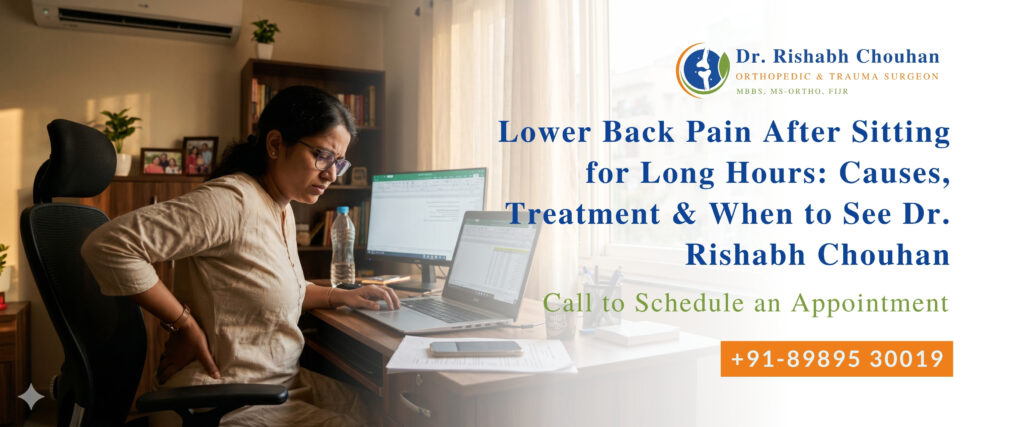
Spending hours at your desk without moving may seem harmless, but it can take a toll on your spine. If you notice stiffness in your lower back after working on a computer, driving for long periods, or studying, you’re not alone.
Lower back pain has become one of the most common musculoskeletal complaints among office professionals, students, and people working from home. The good news is that, in many cases, it can be managed effectively with early treatment, posture correction, and lifestyle changes.
Dr. Rishabh Chouhan, Orthopedic Surgeon in Indore, provides comprehensive evaluation and treatment for lower back pain, sports injuries, arthritis, and other orthopedic conditions, helping patients regain mobility and improve their quality of life.
Why Does Sitting for Long Hours Cause Lower Back Pain?
Although sitting feels like a resting position, remaining seated for prolonged periods places significant stress on the lower spine.
When you sit continuously:
- The muscles supporting your spine become fatigued.
- Hip flexor muscles gradually tighten.
- Core muscles become weaker over time.
- The lumbar (lower back) discs remain under constant pressure.
- Blood circulation to the back muscles decreases, leading to stiffness and discomfort.
Poor posture—such as slouching, leaning forward toward a computer screen, or using an unsupportive chair—can further increase stress on the spine.
Without regular movement, these changes may contribute to persistent lower back pain.
Common Symptoms of Postural Lower Back Pain
Symptoms can vary from person to person but commonly include:
- Dull aching pain in the lower back
- Stiffness after sitting for long periods
- Difficulty standing up after prolonged sitting
- Tightness in the lower back or hips
- Muscle spasms
- Pain that improves after walking or gentle movement
Some people may also experience pain that radiates into the buttock or leg, which may indicate irritation of the sciatic nerve and should be evaluated by an orthopedic specialist.
Is Your Back Pain Normal or Something More Serious?
Many cases of lower back pain are related to posture and muscle strain, but certain symptoms may indicate an underlying spinal condition.
Common Features of Mechanical (Postural) Back Pain
- Pain begins after prolonged sitting
- Improves with movement
- No numbness or weakness
- Pain gradually improves with rest and exercise
Warning Signs That Need Medical Evaluation
Consult an orthopedic surgeon if you experience:
- Pain lasting longer than several weeks
- Pain radiating below the knee
- Numbness or tingling in the legs
- Muscle weakness
- Difficulty walking
- Pain following a fall or accident
- Fever associated with back pain
- Loss of bladder or bowel control (requires immediate emergency medical attention)
Early diagnosis helps identify the cause and allows timely treatment.
Common Causes of Lower Back Pain
Lower back pain after prolonged sitting may result from:
- Poor posture
- Muscle strain
- Weak core muscles
- Lumbar disc problems
- Sciatica
- Degenerative disc disease
- Osteoarthritis of the spine
- Sports injuries
- Obesity
- Sedentary lifestyle
An orthopedic evaluation helps determine the exact cause.
Treatment Options for Lower Back Pain
Treatment depends on the underlying diagnosis and severity of symptoms.
Activity Modification
Avoid prolonged sitting whenever possible.
Standing up, stretching, and walking briefly every 30–60 minutes can help reduce stiffness and improve circulation.
Heat and Cold Therapy
Cold packs may be useful during the initial phase of muscle strain, while heat therapy can help relax tight muscles and reduce stiffness.
Your orthopedic surgeon can advise which option is most appropriate for your condition.
Medications
Pain-relieving or anti-inflammatory medications may be recommended for short-term symptom relief when appropriate.
These should be used only under medical supervision.
Physiotherapy
Physiotherapy plays an important role in treating postural back pain.
A rehabilitation program may include:
- Core strengthening exercises
- Flexibility training
- Posture correction
- Muscle strengthening
- Stretching exercises
- Ergonomic advice
Regular physiotherapy can help reduce pain and lower the risk of recurrence.
Simple Exercises That May Help
Gentle exercises can improve flexibility and strengthen the muscles supporting your spine.
Examples include:
- Cat-Cow Stretch
- Knee-to-Chest Stretch
- Pelvic Tilts
- Bridge Exercise
- Child’s Pose
Exercises should be performed correctly and only after medical evaluation if pain is severe or persistent.
Lifestyle Changes to Reduce Back Pain
Healthy habits can make a significant difference in preventing recurrent lower back pain.
Dr. Rishabh Chouhan recommends:
- Take short walking breaks every 30–60 minutes.
- Maintain correct sitting posture.
- Keep your computer screen at eye level.
- Use a chair with proper lumbar support.
- Keep both feet flat on the floor.
- Avoid prolonged slouching.
- Maintain a healthy body weight.
- Exercise regularly to strengthen your core and back muscles.
- Lift heavy objects using proper technique.
Small daily changes often provide long-term benefits.
When Should You Consult an Orthopedic Surgeon?
You should schedule an orthopedic consultation if:
- Back pain lasts longer than two to six weeks
- Pain keeps returning
- Symptoms interfere with work or sleep
- Pain spreads into the leg
- You develop numbness or weakness
- Walking becomes difficult
- Pain follows a sports injury or fall
- Home treatment is not providing relief
Early diagnosis may help prevent chronic pain and improve recovery.
How Is Lower Back Pain Diagnosed?
A comprehensive evaluation typically includes:
- Detailed medical history
- Physical examination
- Assessment of posture and walking pattern
- Neurological examination
- X-rays when indicated
- MRI scan if nerve compression or disc problems are suspected
The treatment plan is based on the underlying cause rather than symptoms alone.
Why Choose Dr. Rishabh Chouhan for Lower Back Pain Treatment in Indore?
Dr. Rishabh Chouhan provides personalized orthopedic care for patients experiencing lower back pain and other musculoskeletal conditions.
His areas of expertise include:
- Lower Back Pain Treatment
- Sciatica Evaluation and Management
- Sports Injury Treatment
- Arthritis Management
- Knee Pain Treatment
- Hip Pain Treatment
- Arthroscopy
- Joint Replacement Surgery
- Fracture Care
- General Orthopedic Care
Every patient receives an individualized treatment plan focused on accurate diagnosis, evidence-based treatment, and long-term recovery.
Book a Consultation with Dr. Rishabh Chouhan
Lower back pain should not be considered a normal part of daily life. If sitting for long hours is affecting your comfort, productivity, or mobility, early evaluation can help identify the cause and prevent the condition from worsening.
Dr. Rishabh Chouhan, Orthopedic Surgeon in Indore, offers comprehensive assessment and treatment for lower back pain, helping patients return to their daily activities with greater comfort and confidence.
Book your consultation today and take the first step toward a healthier spine and improved quality of life.